End-to-end encrypted · self-hosted · federated
Your private workspace
Files, collaborative documents, and federated messages in one responsive web app. Protected content is encrypted on your device before it reaches your server.
Zero-knowledge server
Collaboration, still encrypted
Yours to run & federate
What’s inside
One encrypted workspace for everything
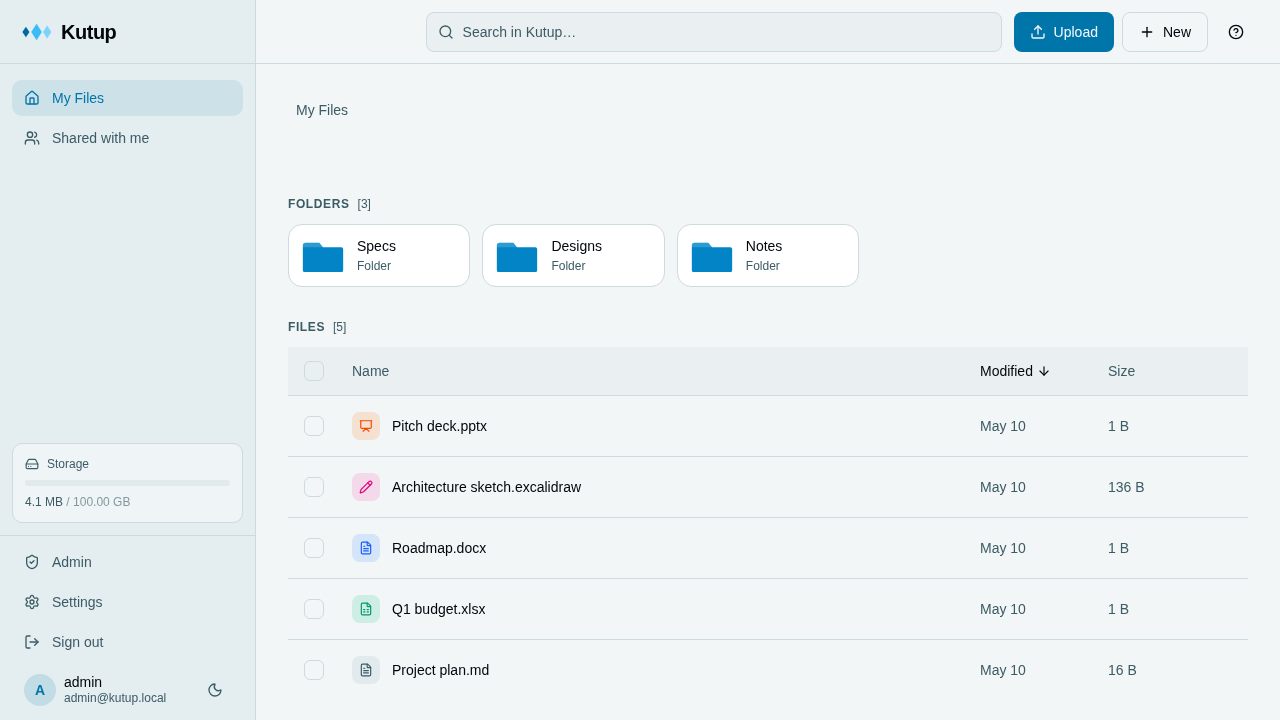
Files, messages, notes, code, spreadsheets, slides, and whiteboards — one responsive web app with light, dark, and system themes.
Files the server can’t read
Nested folders, drag-and-drop uploads, share links, and per-user permissions. Filenames and folder structure are encrypted too.
Live notes & code
CodeMirror 6 + Yjs for Markdown and 20+ code languages, with live multi-user cursors. Every edit reaches the server as ciphertext.
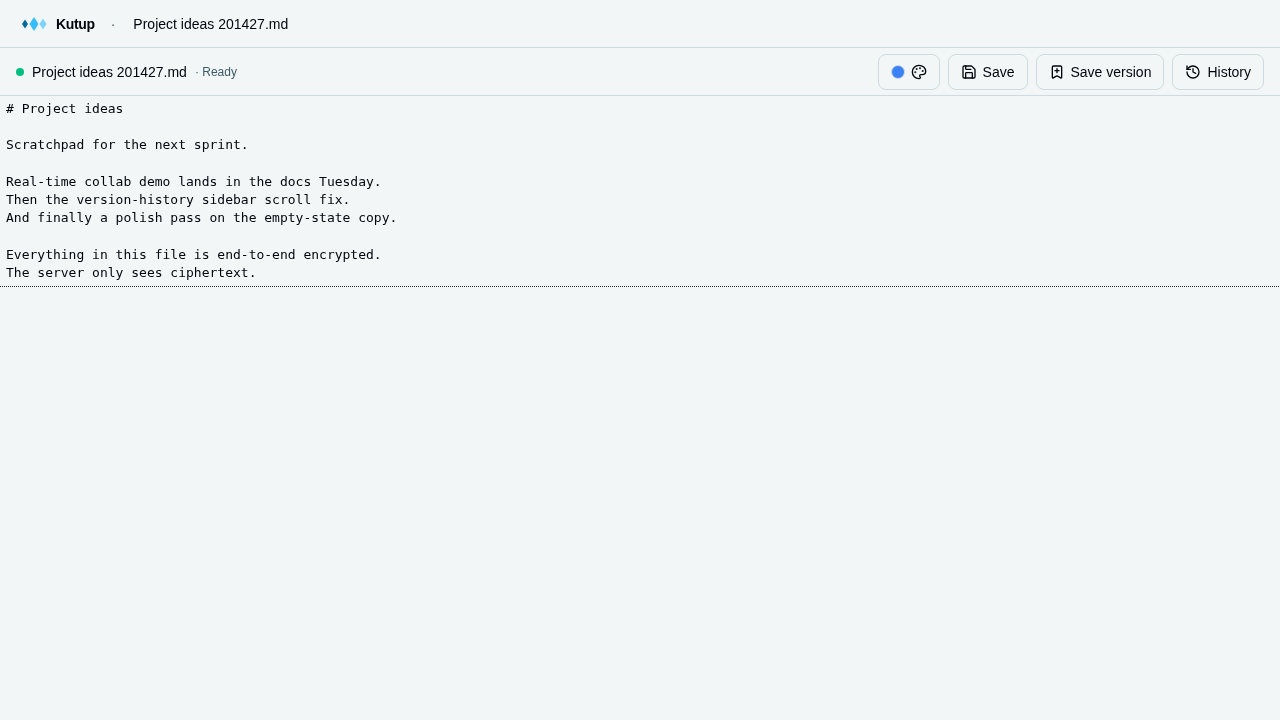
Office docs, fully client-side
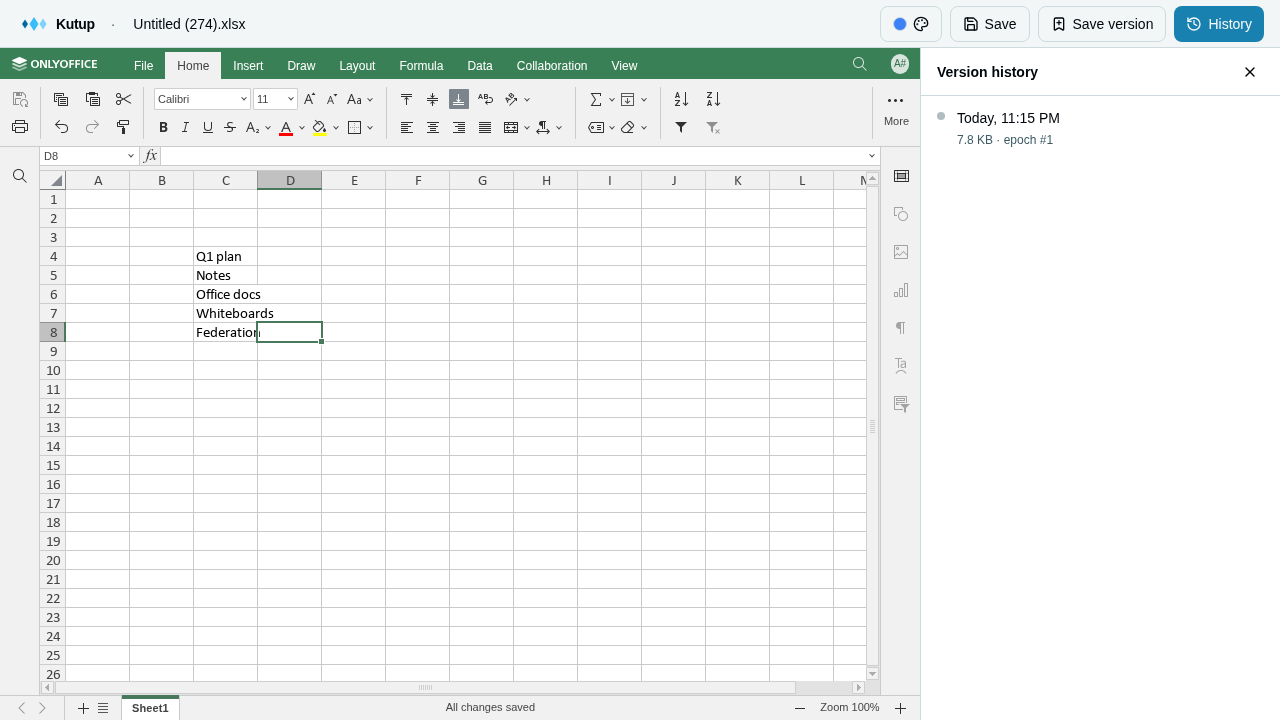
.docx, .xlsx, and .pptx open in OnlyOffice running entirely in your browser. Live presence, formulas, charts — never decrypted server-side.
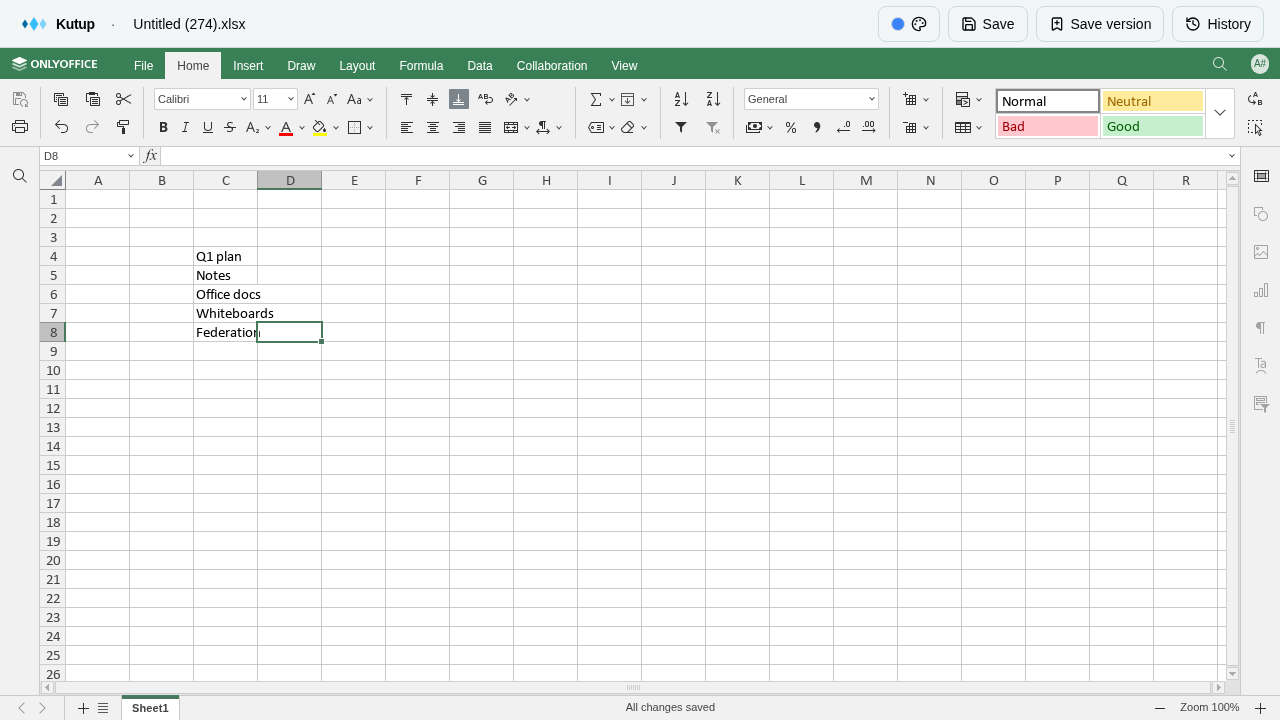
Whiteboards
Excalidraw canvases with live sync — wrapped in the same encrypted envelope as everything else.
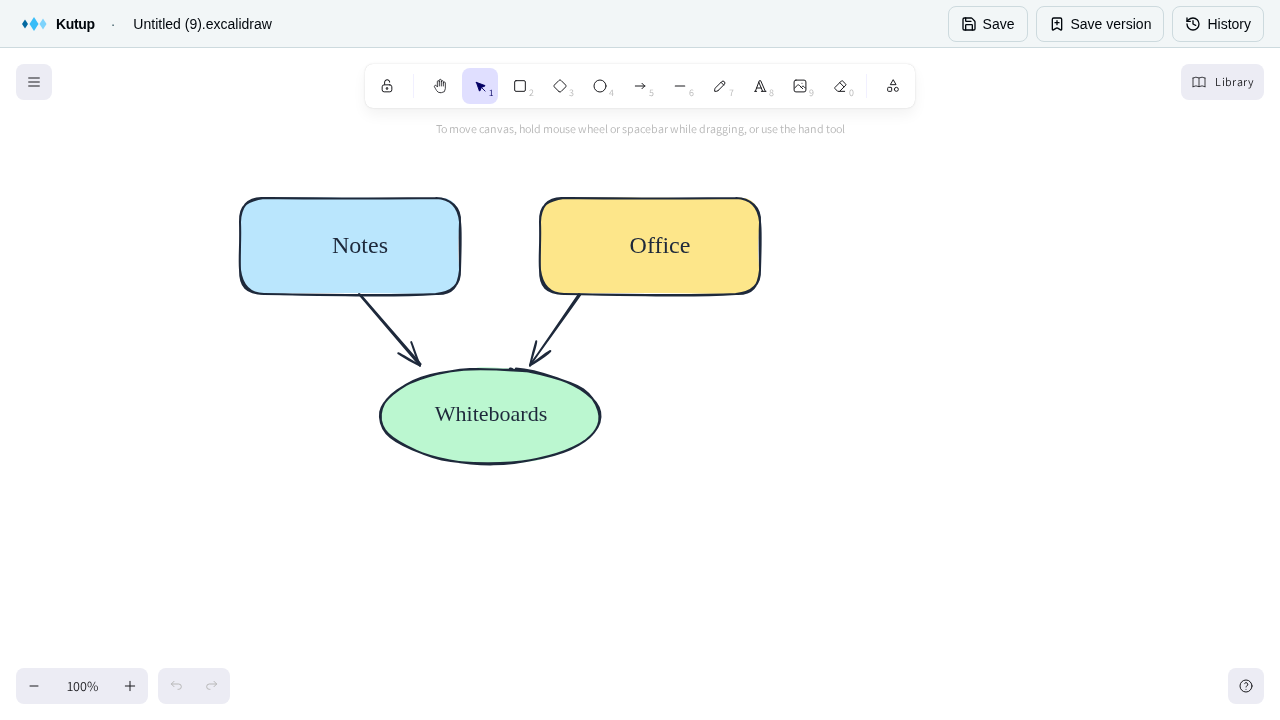
Version history on every file
Every save is a snapshot. Scroll back and restore from the History sidebar in any editor.
You own your keys
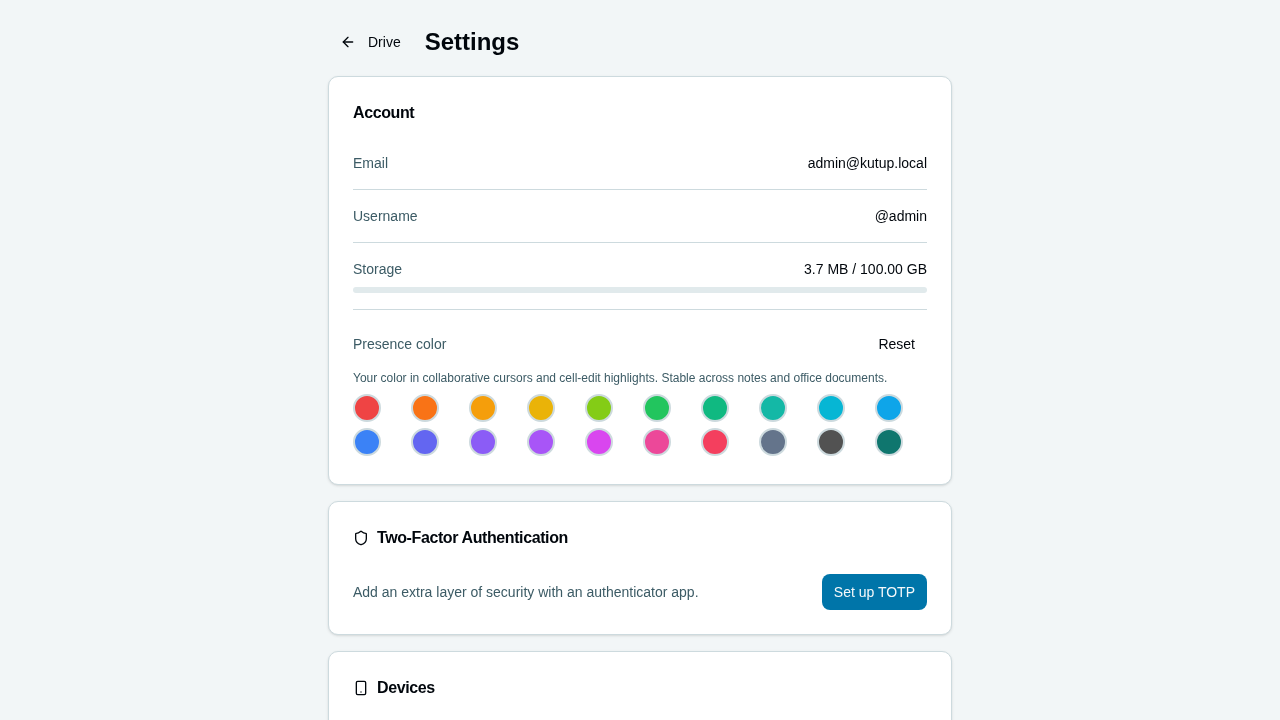
Per-device keys you can revoke, editable Chat installation labels, a 24-word recovery phrase, and optional 2FA.
Federated Chat that recovers
Direct and private-group messages, replies, reactions, edits, disappearing content, and lazy encrypted media. Continuous account-local backup restores protected history after browser loss.

Architecture in 30 seconds
The relay routes ciphertext it can never decrypt
Every collab frame is encrypted in the browser, signed with a per-device Ed25519 key, and sent through an opaque WebSocket relay.
Browser A
AEAD-encrypt + sign the update with a per-device Ed25519 key.
Rust relay
ciphertext only
Verify the signature, route by file, persist and broadcast — bytes unchanged.
Browser B
Verify, decrypt, and apply. Per-file keys derive from the collection master key.
Full key hierarchy, login flow, federation model, and wire spec live in the documentation ↗.
Built on
A pragmatic, auditable stack
Inspired by great open-source projects:OnlyOffice·CryptPad·Ente·Excalidraw
Run your own encrypted workspace today
Clone the repo, fill in a few secrets, and docker compose up. You’re the only one who can read your data.